Showing posts with label The Animation Timeline. Show all posts

Monday, 11 April 2011

The Animation Time line - John Lasseter


 Figure 1, (2009), Luxo Jr

John Lasseter is the director of Pixar, originally part of Lucasfilm before finally separating as it's own company in 1986. Lasseter began created animated shorts such as Luxo Jr which was based on his desk lamp and looking at how an inanimate object can appear life-like which was the influence for Wall E because the character was a robot but had human characteristics in his movements and showed emotion through his telescopic eyes. The dance sequence explored a familiar like human movement as both robots twist and turn, lasseter also managed to capture the sense of speed to tell the viewer that they dancing. "Wall-E's camera moves like a real-life apparatus. And its introductory act has as much of a silent - film feel as any 21st - century production can - with only a handful of human voices." (Rogers, 2011) Unlike the other Pixar films, Wall E had to drive the performance with realistic human-like movements and expression especially in the first act, where the audience is only introduced to Wall E and the cricket so the charming movements makes Wall E an instant loveable character.


Figure 2, (2008), Wall E


 Figure 3, (2009), Toy Story


 Figure 4, (2009), A Bug's Life

Toy Story was Lasseter's first feature length animation at Pixar and also plays the idea of animating the inanimate object. It creates the idea of what a child's toys experience once their owner has left. "the movie lovingly touches on such grownup concerns as nostalgia and the loss of childhood. Of course kids love it too - so this is what happens when we leave the playroom, their wide eyes seem to say." (Larsen, 2010) The film allows the viewer to experience how a child breathes life into a toy when they play with it as if they are seeing it through their eyes. A Bug's Life explored the idea of how a colony of ants operate underground and allowed the viewer to experience another world that they wouldn't usually see because it is hidden from them. It had huge competition with Antz from Dreamworks which followed a similiar story line but both companies put in their own ideas of what an insect world be like. "While A Bug's Life is never less than pleasant and full of luscious cinemascope visuals, coming on the heels of Antz it can't help but suffer in comparrison..." (Sanford, 2002) The evidence implies that eventhough A Bug's Life's story line suffers against Antz, it does have the Pixar charm of good CG animation and loveable characters that the audience can familarise themselves with.


Illustrations

Figure 1, (2009), Luxo Jr, @ http://obamapacman.com/2009/11/john-lasseter-pixar-creative-computer-animation-pioneer-mac-user/, Accessed on: 11th November 2009

Figure 2, (2008), Wall E, @ http://www.filmofilia.com/tag/pixar/page/3/, Accessed on: 3rd June 2008

Figure 3, (2009), Toy Story, @ http://www.moviemobsters.com/2009/12/03/top-ten-pixar-films/, Accessed on: 3rd December 2009

Figure 4, (2009), A Bug's Life, @ http://www.moviemobsters.com/2009/12/03/top-ten-pixar-films/, Accessed on: 3rd December 2009

Bibliography 

Larsen John, (2010), Larsen on film - Toy Story, @ http://www.larsenonfilm.com/index.php?Page=SoloReview&ReviewID=1891, Accessed on: 10th June 2010

Rogers Nick, (2011), Heroes of the Zeroes: Wall E, @ http://www.thefilmyap.com/2010/11/24/wall-e/, Accessed on: 2nd December 2010

Sanford James, (2002), A Bug's Life, @ http://www.imdb.com/reviews/159/15933.html, Accessed on: 23rd June 2002

The Animation Time line - Sylvain Chomet (1963 - Present)


Chomet mixes three dimensional and hand - drawn animation to tell a heart warming story, they have no real dialogue so relies on body movements and exaggeration. "Chomet's wonderful artwork and lively characters and worlds make for an incredible viewing experience. It's not easy to create a film with no dialogue-not to mention an animated film... His characters' actions speak louder than words ever could..." (WordPress, 2011) Chomet's film return to the familiar technique of a silent movie but the performance is not forced, it is left to play out between the interaction of the characters. The Illusionist shares the bond between the small girl and the old entertainer which could have been received out of context but Chomet has created a real bond and understanding of the characters. "The Illusionist amounts to a quiet act of defiance with its hand-drawn tale of an ageing, outmoded music-hall entertainer. The Illusionist is sweet and sad and shackled to the past." (Brooks, 2010)  The evindence siginifies how the story's back log makes the Illusionist inviting but also sad when the viewer realises the truth with the ending scene and the photograph but Chomet's intention is not to disturb the audience but draw them into the world of rich colour and warm characters.


Figure 1, (2010) The Illusionist still 1


Figure 2, (2011), The Illusionist still 2

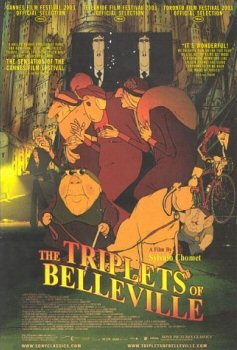
Chomet's other examples also express the mix of styles, for example The Triplets of Belleville which allowed him to become introduced to a much wider audience but the story is not in the same league as The Illusionist. "A gorgeous mix of hand drawn animation, CGI, and video, Sylvain Chomet's wild adventure is a beautifully rendered odyssey that delights with humour and flair, even if it doesn't make a lick of sense in terms of intent." (Leo, 2004) Chomet created a great mix of 2D and 3D that allowed the worlds to feel life-like and experimented with this style across all his animations but it wasn't until the illusionist that this technique and the narrative came together as a full performance.


Figure 3, (2003), The Triplets of Belleville


Figure 4, (2011), The Old Lady and the Pigeons


Illustrations

Figure 1, (2010) The Illusionist still 1,@ http://www.awardsdaily.com/2010/03/sylvain-chomet%E2%80%99s-the-illusionist/, Accessed on: 22nd March 2010

Figure 2, (2011), The Illusionist still 2, @ http://www.daemonsmovies.com/2010/04/20/lillusionniste-the-illusionist-29-movie-photos/, Accessed on: 2007

Figure 3, (2003), The Triplets of Belleville, @ http://www.awn.com/articles/people/sylvain-chomet-s-ithe-triplets-bellevillei, Accessed on: 20th November 2003

Figure 4, (2011), The Old Lady and the Pigeons, @ http://www.atpfestival.com/events/illbeyourmirrorjapan/view/filmsinfo.php, Accessed on: 16th February 2011

Bibliography

Brooks Xan, (2010), The Guardian, @ http://www.guardian.co.uk/film/2010/jun/16/the-illusionist-sylvain-chomet-review, Accessed on:17th June 2010

Leo Vince, (2004), The Triplets of Belleville (2003), @ http://www.qwipster.net/triplets.htm, Accessed on: 2004

WordPress reviewer, (2011), All Film Reviews - The Illusionist, @ http://allfilmreviews.wordpress.com/2011/03/03/the-illusionist-sylvain-chomet2010/, Accessed on: 3rd March 2011

Wednesday, 6 April 2011

The Animation Time line - Raymond Briggs (1934 - Present)


Figure 1, (2011), When the Wind Blows Still 1

Raymond Briggs is a cartoonist and graphic novelist, who has produced hand drawn animations for adults and children. His best known work is The Snowman, which was entirely wordless and produced only in crayon. "The simplicity of the story (a boy makes a snowman which comes to life and takes him on a magical flight through the night sky) only serves to heighten the tragedy of it's ending: when a boy wakes up the morning after, the snowman has been reduced to a puddle." (Secher, 2007) Briggs has visualised the magic of Christmas and imagination as exciting and fast pace but also allows the story to slowly build up to the what has to happen in the final act which captures the real world of when a child loses their snowman as the temperature raises and they are devastated. Briggs continued this simplistic style to create more adult based content which captures a real event that has happened, in the case of When the Wind Blows, tells the story of an elderly retired couple living in a rural cottage when a bomb strikes. Both these characters survive and at first it seems to be that the shelter protected them, until the story plays out and the viewer witnesses the effects of the fall out radiation take over and the symptoms are clearly show in their appearance. The mood of this story turns dark as the area looked pretty in the beginning until the bomb hits and changes the tone and reduces the countryside to rubble, emphasising the impact of a sudden disaster. "Written and illustrated by Raymond Briggs, When the Wind Blows was his first attempt at an adult graphic novel. Released in 1982 ... A heavy topic, but the dark, yet compassionate sense of humour pervading the book lightens the mood somewhat. Twinned with the cosy, pastel shaded art - work, the unsettling, yet warm - hearted story closely examines the initial effects of a disaster on two people who have never done anything to deserve it." (Ciao Reviewer, 2011) The point in this quote explores how Brigg's soft pastel style makes the animation seem more friendly but it also entails a serious fact of how a person would try to fight an unstoppable force and how in the end they are beaten.


Figure 2, (2011), When the Wind Blows Still 2


Figure 3, (2010), The Snowman

Briggs continued to produce works for children in the form of a television series, including The Bear recapturing the lovable quality of The Snowman  of a child's bond to the bear. "The Bear has all the marks of a classic. Lauded by animal rights groups for it's respect for the integrity of all species, it manages to speak out eloquently against the senseless hunting of wildlife without having to depict killing to make it's point. Instead, it emphasizes the ties that bind the human and animal worlds together." (Brussat, 2009) Briggs has managed to implant a series message in his animations but still retain the soft appropriate style that allows any age range to view it and in the Bear, it is to protect and look after the animal kingdom without showing all the horror and darkness.


Figure 4, (2011), The Bear


Illustrations

Figure 1, (2011), When the Wind Blows Still 1, @ http://123nonstop.com/pictures/When_the_Wind_Blows , Accessed on: 2009

Figure 2, (2011), When the Wind Blows Still 2, @ http://www.dvdactive.com/reviews/dvd/when-the-wind-blows.html, Accessed on: 19th September 2005

Figure 3, (2010), The Snowman, @ http://georgesjournal.files.wordpress.com/2010/09/christmas_tv_the_snowman_82.jpg, Accessed on: 24th December 2004

Figure 4, (2011), The Bear, @ http://www.channel4.com/programmes/the-bear, Accessed on: 2011


Bibliography

Brussat Frederic and Mary Ann, (2009), Spirituality and Practice - The Bear, @ http://www.spiritualityandpractice.com/films/films.php?id=2825, Accessed on: 21st August 2002

Ciao Reviewer, (2011), CIAO - When the Wind Blows, @ http://www.ciao.co.uk/When_the_Wind_Blows_Raymond_Briggs__Review_5840341, Accessed on: 27th May 2009

Secher Benjamin, (2007), The Telegraph - The Snowman, @ http://www.telegraph.co.uk/culture/books/3670140/Raymond-Briggs-I-dont-believe-in-happy-endings.html, Accessed on: 24th December 2007

Thursday, 31 March 2011

The Animation Timeline - Bill Plympton (1946 - Present)


Figure 1, (2008), How to Kiss


Figure 2, (2009), The Tune

Bill Plympton began his cartooning career by creating cartoons for publications such as the New York Times and Playboy. He then went on to produce his first feature films in the style of surreal musical fantasy with inspired animation. "It's quintessential Plympton in that it has a hand-drawn look that emphasizes pencil lines and shading, and it offers up somewhat disturbing absurdest humour that relies on the extreme plasticity of form that only animation can deliver. Plympton is an animator's animator not only because his drawings are magnificent (and magnificently weird), but because he plays the medium for all that it is worth-Plympton's odd and hilarious vision of reality can only be expressed via animation." (Mancini, 2009) Plympton's technique allows a controlled form of how the characters can be exaggerated as if the have a clay feel, able to be morphed and merged to produce disgusting and disturbing forms.


Figure 3, (2011), The Tune 2


Plympton has expressed dark humour in his animations allowing him to exaggerate on serious themes and turn them into something twisted. "Plymptons, dating back to the physiognomy transmutations of 1987's "Your Face", "have always relied on sudden eruptions of sex and violence to elicit audience response." (Staff, 2008) the evidence states how Plympton has taken issues that a viewer would probably find serious in the real world and tend to avoid but in the animations it is appropriate because of the style and light heartiness of the performance. The exaggerations gives the viewer an idea of the emotions that Plymptoon was trying to communicate as in 'The Tune' that reveals two characters separated with the man's successful to write a new hit and become successful and in the process meets a range of unusual characters that have some back story of how they have ended up or where they see themselves going which inspires the main character to see the world different and causes the audience to sympathize with him. "Plympton goes for mood over sight gags, which gives his fans an idea of his range. As an '80's time capsule, the live action portions of the video itself are absurdly amusing." (Lineberger, 2006) The quote picks up on 'mood over sight gags' so basically Plymptoon tries to draw his comedy from emotion and how we hear and feel instead of the obvious.

Figure 4, (2007), Guard Dog

Illustrations

Figure 1, (2008), How to Kiss, @ http://www.plymptoons.com/biography/anishorts.html, Accessed on: 2003

Figure 2, (2009), The Tune,@ http://www.taringa.net/posts/tv-peliculas-series/2003996/The-Tune---Bill-Plympton.html, Accessed on: 13th January 2009

Figure 3, (2011), The Tune 2, @ http://hotfileserve.com/tune-extras-1992-dvd5-641745/, Accessed on: February 2011

Figure 4, (2007), Guard Dog, @ http://www.body-pixel.com/2009/07/22/pocket-cinema-bill-plympton-short-films/, Accessed on: 22nd July 2009

Bibliography

Lineberger Rob, (2006), DVD Verdict - Plymptoons, @ http://www.dvdverdict.com/reviews/earlyplympton.php, Acessed on 28th April 2008

Mancini Dan, (2009), Bill Plymptoon's Dog days, @ http://www.dvdverdict.com/reviews/dogdays.php, Accessed on: 23rd July 2009

Staff Variety, (2008), Film Reviews - Idoits and Angels,@
http://www.variety.com/review/VE1117937044?refcatid=31, Accessed on: 6th May 2008


Thursday, 24 March 2011

The Animation Timeline - Jiri Barta (1948 - Present)


Figure 1, (2010), In the Attic


Figure 2, (2006), The Pied Piper of Hamelin

Jiri Barta is another animator influnced by the grotesque and disturbing visuals of Svankmajer, using mannequinns, abandoned gloves of wooden puppets for the central characters. Sound is emphasised in Barta's animations of blood sloshing, etc and it gives a quality of the character and their relation to the created world. "Jiri Barta is a much heralded figure in animation circles. The Czech filmmaker has built his reputation on a series of wondrously strange films that combine live-action, hand-drawn animation, and stop-motion in exciting ways." (Rich, 2006) Barta is recognised for experimenting and combining the three techniques to gain his bizarre but successful results. The Pied Piper of Hamelin is one example where these techniques are used, the rats appear as real life and then when they run on set they transform into the puppets to match the style of set and characters.


       Figure 3, (2011), The Vanished World of Gloves

The themes of greed and gluttony are shown in Barta's town and puppet characters that feast on exotic banquets. The characters in Pied Piper drap themselves with precious jewels, whereas the townsfolk haggle at the market stalls to pay the least price possible so there is a comparrison between the villagers that live in hamelin. "The real gem here is The Pied Piper of Hamelin aka Krysar, Barta's unique puppet version of the famous story. Clocking in at about 53 minutes, it takes a leisurely tour through the story, with real rats combining with wodden somewhat cubist puppets representating the humans. Everything about the film is arresting; the architecture of the city looks as if it's erupted from the earth rather than been built, and the puppets are a beautiful range of figures and faces." (Wilson, 2006) The evidence explores how the characters and set has emotive gestures and have similarties to real life but also twisted to make the original tale dark. "Barta's film creates a striking contrast to the Disney conception of the pied piper legend as a children's comedy. Barta's adaption is a challenging and metaphoric morality that continues in the Czech tradition of Pied Piper adaptations began by Viktor Dyk in literature (Krysar, 1915)" (Kosuilca, 2002) Barta has the incoporated the original metaphors and dark symbolism in the same way that Lotte Reineger incoporated fairy tales using silhouttes. Barta has used twisted puppet forms to represent the characters of the story so that it is recognisable to the viewer who the people in the story are and what they represent in the plot.


Figure 4, (2007), The Pied Piper of Hamelin 2


Illustrations

Figure 1, (2010), In the Attic, @ http://drnorth.wordpress.com/2010/05/13/jiri-bartas-in-the-attic-the-other-toy-story/, Accessed on: 13th May 2010

Figure 2, (2006), The Pied Piper of Hamelin, @ http://www.dvdtalk.com/reviews/23937/jiri-barta-labyrinth-of-darkness/, Accessed on: 12th September 2006

Figure 3, (2011), The Vanished World of Gloves, @ http://www.kratkyfilm.cz/catalogue/print/263.htm, Accessed on: 2011

Figure 4, (2007), The Pied Piper of Hamelin 2, @ http://notcoming.com/features/jiribarta/, Accessed on: 17th June 2007

Bibliography

Kosulicova Ivana, (2002), The Morality of Horror, @ http://www.kinoeye.org/02/01/kosulicova01_no2.php, Accessed on: 7th January 2002

Rich James, (2006), Jiri Barta: Labyrinth of Darkness, @ http://www.dvdtalk.com/reviews/23937/jiri-barta-labyrinth-of-darkness/, Accessed on: 19th September 2006

Wilson Jeff, (2006), Jiri Barta, @ http://www.digitallyobsessed.com/displaylegacy.php?ID=8931, Accessed on: 14th September 2006


The Animation Timeline - The Quay Brothers (1947 - Present)


Figure 1, (2008), The Street of Crocodiles 1

The Quay brothers used the uncanny to tell a dark and twisted story, taking inspiration from Svankmajer and Bruno Schulz but used puppets and animated objects. The Street of  Crocodiles is set in a trashy neighbourhood and entering a shop where the story twists into a strange set of dolls changing the main character's head and filling it with tissues. "The fact is however that there just doesn't appear to be any such thing as a typical Quay Brothers film, and it's this sense of restlessly experimenting, progressively moving forward and expanding the range of what their darkly disturbing stop-motion animation techniques can achieve that makes this set such fascinating viewing." (Megahey,2011) The brothers take the most ordinary worlds such as streets and saloons and transform them into unfamiliar and nightmarish visions. The use of puppets touches of the realm of the uncanny because they have the distinct look of a person so animated these forms make them seem creepier. "Contraptions are key to their work and their beaten up little puppets and macabre mannequins frequently find themselves having their strings cut or being subjected to death or worse. Also prevalent is an unexpected mix of the organic with this machinery." (Wilkinson, 2006) This evidence links back to the influence of Svankmajer and how he used sets of characters to destroy each other through the use of media and how it can be manipulated to look revolting.


Figure 2, (2009), The Street of Crocodiles 2

There is not much structure in the stories and logic is lost as the decaying environments and strange characters dominate. This allowed the Quay's to explore empty spaces and basic lighting that makes a realistic sparkle in a doll's eyes, making them the sinister and the unnerving. "Surrealist films aren't meant to be interpreted in the systematic manner of a foreign language, One reads into them what one will, and, in this case, if one has any knowledge of the source material, what one can. The Quay films have the initial impact of monstrous, extremely personal visions of disorder, set in a pocket - sized universe where effects have little to do with causes." (Canby, 1987) The evidence implies that there is no messages or symbolism in surreal animations, they are basically meant to unnerve the audience, creating a twisted atmosphere, that later influenced Tim Burton in his dark themed stop motions.


 Figure 3, (2010), The unnameable little broom

Illustrations

Figure 1, (2008), The Street of Crocodiles 1, @ http://saltinthecode.wordpress.com/2008/01/11/getting-dusty-brothers-quays-street-of-crocodiles/, Accessed on: 11th January 2008

Figure 2, (2009), The Street of Crocodiles 2, @ http://www.whitleyartsfestival.co.uk/default.asp?id=88&ver=1, Accessed on: 15th October 2009

Figure 3, (2010), The unnameable little broom, @ http://www.sensesofcinema.com/2004/great-directors/quay_brothers/, Accessed on: 12th February 2004


 Bibliography

Canby Vincent, (1987), Film: Brother's Quay animation, @ http://movies.nytimes.com/movie/review?res=9B0DE5DC163DF93AA15757C0A961948260, Accessed on: 29th April 1987

Megahey Noel, (2011), The Quay Brothers: The short films,@ http://homecinema.thedigitalfix.co.uk/content.php?contentid=63327, Accessed on: 20th November 2006

Wilkinson Amber, (2006), eye for film - The quay Brothers, @ http://www.eyeforfilm.co.uk/reviews.php?id=5460, Accessed on: 200


Sunday, 20 March 2011

The Animation Timeline - Jan Svankmajer (1934 - Present)


 Figure 1, (2009), Passionate Dialogue

Jan Svankmajer is a surrealist and best known for his surreal stop motion animations, where he uses several media. His work captures the dark style of Ladislaw Starewicz and also influenced other artists such as Tim Burton, Terry Gilliham and The Brother's Quay. "Svankmajer's works are bad dream strange, an unpredictable array of crazy visuals that ripple with textures that Burton and Gilliam would eventually borrow and build upon in their unique way." (Rosell, 2006) Svankmajer embraces the bizarre and peculiar as he derives the story from the materials he uses and the term 'crazy visuals' in the evidence relates to the the characters and what they are doing, which is confusing at first but becomes clearer as the story cycles round or repeats within the sequence. The materials he uses allows him to morph and mold characters to transform or become one being to eventually become nothing. The Dimension of Dialogue series shows this when the characters are attacking each other through digestion or ripping the clay apart. "Svankmajer prefers to portray evolution as a futile process leading at best to endless circularity and at worst to terminal self-destruction -... which apparent progress proves to be illusory." (Bitel, 2011) This means that Svankmajer would show something basic at the start of the sequence and then this is explained through the progression of the story through a cycle or all characters are dead resembling the ultimate resolution.


 Figure 2, (2011), Passionate Dialogue 2

The Dimensions of Dialogue series also show the closeness between humans, especially Passion Dialogue where the characters make love and morphs into each other as if becoming one in the connection. "It is, in essence, a three part play dealing with various elements of human interaction. If nothing else, and if political readings are of no interest to you, it is an absolute masterclass in the field of animation, a visual experience no one should miss out on." (Eason, 2010) It indicates how Svankmajer uses these sequences to convey how the emotions between the characters would change towards each other to become more intense and aggressive. The Clay animations allowed him to show stronger emotion because the material can be manipulated so that there is a link between the characters in one section and then totally enraged and tearing each other apart in another.


 Figure 3, (2011), Dimensions of Dialogue part 2


 Figure 4, (2011), Exhaustive Dialogue


Illustrations

Figure 1, (2009), Passionate Dialogue, @ http://ideologic.wordpress.com/2009/06/12/jan-svankmajer/, Accessed on: 12th June 2009

Figure 2, (2011), Passionate Dialogue 2, @ http://blog.skillset.org/, Accessed on: 25th February 2011

Figure 3, (2011), Dimensions of Dialogue part 2, @ http://www.totalfilm.com/media/10360, Accessed on: 2011

Figure 4, (2011), Exhaustive Dialogue, @ http://susiepentelow.blogspot.com/2011/01/jan-svankmajers-animations.html, Accessed on: 27th January 2011

Bibliography

Bitel Anton, (2011), Jan Svankmajer - The Complete short Films, @ http://www.eyeforfilm.co.uk/reviews.php?id=5972, Accessed on: 2006

Eason Jack, (2010), Dimensions of Dialogue, @ http://www.cinelogue.com/reviews/dimensions-of-dialogue, Accessed on: 19th November 2010

Rosell Rich, (2006), Jan Svankmajer: The Ossuary and Other Tales, @ http://www.digitallyobsessed.com/displaylegacy.php?ID=8932, Accessed on: 12th September 2006


The Animation Timeline - Ladislaw Starewicz (1882 - 1965)


Ladislaw Starewicz uses insects and animals for the characters of his animations but they are not targeted for children like Disney's animations as Starewicz embraced a dark themes to make his stories twist unusually. Starewicz first animation was The Cameraman's Revenge which stars a cast of stag beetles and grasshoppers, capturing the disturbing forms and nightmarish shapes of the insects in a story of love and infidelity. Frogland focused on the strangeness of amphibians and the story of political allegory. "These short films range from the touching to the bizarre (I never associated frogs with Christmas), and the masterpiece of the collection is "The Mascot". I believe it was released the same year as King Kong." (DVD near, 2011) Starewicz mixes bizarre elements together to make his sequences surreal but there is also enough information to tell the audience when a character is lovable and heroic. In The Mascot, the young pup toy is clearly the hero and has the lovable cuteness that makes the character adorable to the viewer.


Figure 1, (2010), Mascot still1


Figure 2, (2011), Mascot still 2


In the case of The Mascot, a child's toy dog roams the streets looking for an orange for his master so focuses on the fear of walking around in the world and becoming exposed to dark and evil. "In particular, Starewicz's 1933 short 'The Mascot' plays like a blueprint for the style of Tim Burton productions like The Nightmare Before Christmas, with its large cast of bizarre dolls and puppets brought to life by painstaking stop-motionwork. It's impressive even by today's standards." (Faust, 2010) The quote identifies Starewicz's style as an early influence for more contemporary animators such as Tim Burton, who explores the dark and disturbing to make the audience see an everyday situation as a world of nightmares. The materials used for Starewicz's animation were plain and simple but worked together to construct the theme of his story. "Starewicz's The Mascot (1934) aka The Devil's Ball which was an amazing flight of fancy featuring supernatural creatures made of paper, twigs, wire, bones, glass, cloth and other found materials, all coming together in a madcap witching hour party presided over by a puppet Devil and his talking skull head walking stick." (Morlock, 2009) The materials he used were manipulated and twisted into the disturbing forms of the evil looking characters, which was really successful to distinguish the bird and fish skeleton come to life and the devil.


Figure 3, (2011) The Tale of the Fox


Illustrations

Figure 1, (2010), Mascot still1, @ http://wondersinthedark.wordpress.com/2010/10/21/images-from-the-mascot/, Accessed on: 21st October 2010

Figure 2, (2011), Mascot still 2, @ http://millennium-thisiswhoweare.net/cmeacg/millennium_episode_article.php?article=2&mlm_code=207, Accessed on: 31st October 1997

Figure 3, (2011) The Tale of the Fox, @ http://wn.com/The_Tale_of_the_Fox, Accessed on: 2011

Bibliography

DVD near, (2011), Longing for more Starewicz, @ http://www.dvdnear.com/Cameraman-Revenge-Other-Fantastic-Tales-reviews-B0006L0LG6_1.htm, Accessed on: 2007

Faust M, (2010), The Films of Ladislaw Starewicz, @ http://artvoice.com/issues/v9n7/film_reviews/ladislaw_starewicz, Accessed on: 18th February 2010

Morlock Jeff, (2009), The Id runs wild - The Films of Animator Ladislaw Starewicz, @ http://moviemorlocks.com/2009/04/11/the-id-runs-wild-%e2%80%93-the-films-of-animator-ladislaw-starewicz/, Accessed on: 11th April 2009


Saturday, 19 March 2011

The Animation Timeline - Norman Mclaren (1914 - 1987)


 Figure 1, (2009), Begone Dull Care


Norman Mclaren created animations that responded to the soundtrack with a range of tempos. In the case of Begone Dull Care, the piece responds to jazz so there is a range of bright colours and shapes to mimic the speed the instruments are played. "Begone were created after the music had been produced, designed to give images to music." (North, 2010) the evidence identifies that Mclaren's abstract style of colour and shape are vision responses to the actual music to capture the rhythm emotion of the piece. Mclaren's technique was quite basic to give his visual imagery across as demonstrated in Le Merle and Lines Horizontal because the viewer can engage the importance of the shapes in connection to the music. " [He would] methodically go through the absolutely basic techniques available to the animator to create the illusion of motion, demonstrating the different effects - and crucially, the different emotional effects - to be had from varying the tempo of movement." (Hobbs, 2011) Mclaren wanted his animations to give the impression of motion through the speed of tempo so slower sequences would appear more relaxing to the fast paced sequences.


Figure 2, (2011), Lines Horizontal


 Figure 3, (2008), Pas de Deux

In some of the animations, Mclaren attempts to capture the beauty of movement and rhythm as displayed in Pas de Deux with white silhouetted figures moving gracefully as they create the dance movements and shapes. "Watching the collection is a tremendously varied and engaging experience, from the abstract and playful colour antics and jazz score of Boogie-Doodle (1940) to the 'live action' story of a man attempting to sit in a reluctant chair in A Chairy Tale (1957) to Mclaren's 'Line' films (1960 - 62) composed of moving lines that oscillate back and forth across the screen in rhythmic patterns." (Cummings, 2004) The evidence shows how the range of techniques and animations inspire to capture the rhythm of patterns by concentrating on how the expressions of movement and colour. In the case of Pas de Deux the white silhouettes are moving on a black background so that they are defined and the viewer can see what is happening clearly.


 Figure 4, (2007), Le Merle


Illustrations

Figure 1, (2009), Begone Dull Care, @ http://drnorth.wordpress.com/2009/06/25/begone-dull-care-norman-mclaren-randomised/, Accessed on: 26th June 2009

Figure 2, (2011), Lines Horizontal, @ http://www.dailymotion.com/video/x19vai_lines-horizontal-norman-mclaren-196_shortfilms, Accessed on: 2005

Figure 3, (2008), Pas de Deux, @ http://www.johncoulthart.com/feuilleton/2008/04/12/norman-mclaren/, Accessed on 12th April 2008

Figure 4, (2007), Le Merle, @ http://www.chelseaspace.org/archive/azumi-pr.html, Accessed on: 16th June 2007

Bibliography

Cummings Doug, 2004, filmjourney.org, @ http://www.filmjourney.org/2004/03/07/norman-mclaren/, Accessed on: 7th March 2004

Hobbs Graeme, (2011), Every Film is a kind of dance: The Art of Norman Mclaren, @ http://www.moviemail-online.co.uk/scripts/article.pl?articleID=276, Accessed on: 1996

North Dan, (2010), The Significance of Sound in Norman Mclaren's Films, @ http://drnorth.wordpress.com/2010/12/04/the-significance-of-sound-in-norman-mclaren%E2%80%99s-films/, Accessed on: 4th December 2010