Someone eventually figures out the spiders need the electric on the outside
darkness - leap of faith - relaying on what they have with them e.g. torches
Sounds and movement in the darkness
Leap of faith - Last Crusade - audience brought into the illusion
Military base, science lab that goes underground
Sort out characters 'cast', location and spiders
Human Vision, Robot Spider, Camera Vision, Security Cam
Sees electric current - distinquish colours - sense
Redness - body temp
Motion detector - scanning lifeforms
electromagnetic, energy pockets
Detector goes awol as spiders draw closer to them
Hypercondriact character
Female (over reacting news reporter) silhetto sounds as she walks
spider 'electric sounds'
equipment suitable to scene - believable as a laboratory
Homework
Find a trailer thats similiar set up as our idea and break it up as a timeline, analyse
Films to watch
Acronophobia - 1994
Bug movies/ Swarm movies
Tarantula
Eight Legged Freaks
We have come a lot closer to a defined story structure and now have a good strong idea so all thats left is to go back and sort out who are cast is going to be, a better idea of the locations and the spiders but I feel the story is getting stronger all the time we are adding in little details the story is becoming clearer.
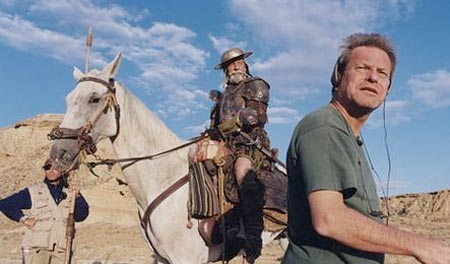
Lost in La Mancha documents Terry Gilliam's attempt to produce a finished verison of 'The Man Who killed Don Quixote'. It captures Gilliam's ambition to see the project through and how it spirals out of control as more and more obstacles block Gilliam from achieving this. "Lost in La Mancha gives the viewer a unique insight into the way in which films are made and unmade, a glimpse at the peculiar fragility of filmmaking as an art form, and a potrait of the insainty and nobility of creative spirit." (Smart, 2002) This evidence outlines the experience Gilliam had with this project and how his passion pushed him forward even though the production was riddled with problems such as a severe storm the destroys and washes away some of the equipment. Through the documeted journey, the viewer sees Gilliam overcome most of the problems as he tries to ignite the filming process after each failure but eventually Gilliam becomes defeated due to one of the bankers not having all the money promised.
Figure 1, (2009), Jean Rochefort (Quixode) riding a horse Scene
Gilliam was not the only director to the fail the 'Quixote project' as several more failed attempts have been made previously. "...the history of cinema is marked by the bleached bones of unmade or unfinished versions of Don Quixote, stretching from Sergi Eisenstein's in the 1920's to Orson Welle's in the 1950's. It's as if some curse were transfered from it's mad, idealsitic hero to those attracted to bringing him to the screen." (French, 2002) The viewer can experience this 'Quixote Curse' as Gilliam was continuously pushed back from storms and sounds of an aeroplane overhead as if a mystic force was telling the director that this film was never meant to be made. There is also a connection with Gilliam and the previous directors on this project such as Orson welles who struggled on the project for two decades before his star of the film died before the project was finished.
Figure 2, (2003), Still of the actors walking through the desert scene
The documentary also links Gilliam to his star in the film, when the project seems hopeless. "Fulton and Pepe are brilliant filmakers in their own right, framing Gilliam trudging lost across a mud flat like the manifestation of his demented hero..." (Chaw, 2002) In the evidence 'the manifestation of his demented hero' the quote identifies how Gilliam had to cover strenches of vast open desert to work on a new shot but also his a link to his main star Quixode, both setting out on an endless journey that seems unlikely to ever finish. Gilliam changes emotionally, shown in the documentary as promises of excitment to the final scenes depicting his disappointment and self failure.
Figure 3, (2009), Terry Gilliam expressing how his ambition has failed
I have found some variations in the way a spider has been used as a symbol of fear coming across seriously and comedically. Some of these examples may help make our story ideas stronger with incoporating some ideas that have come before. I particular like the Ice Spiders trailer, it has a great set up and has a similiar story type to what we wanted to do.
As a lot of our stronger ideas have been leaning towards the horror genre in one way or another I have decided to just provide some background research into the actual genre around the time period 30's - 60's to identify what was popular and what could be useful to work into our story.
Examples
Always been some sort of Monster hanging around as a sort of fear symbol into the minds of people.
Just before 1930, Horror stories were creatures of Prehistoric origin such as the early 'Lost World'
The Lost World (1925)
This later led to Kong and Godzilla as missing link symbols and symbolised as destructive gods
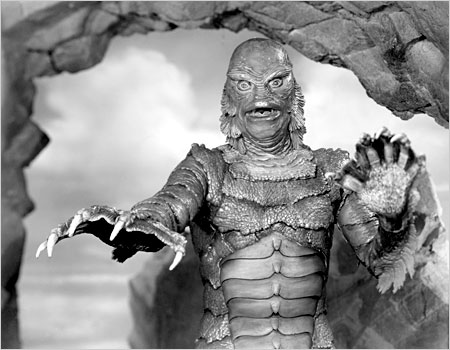
The Creature from the Black Lagoon in 1954 was a beginning of a hybrid mash, in this case half man, half fish
rubber suit
The Creature from the Black Lagoon (1954)
A lot more low budget horror movies in the 50's such as It came from Beneath the Sea, a giant octopus - mutated by atomic radiation and attacks San Francisco, another example: The Abominable Snowman
It Came From Beneath the sea
Also in the 50's were films of experiments gone wrong and one example is Tarantula (1955), a spider treated by serum and grows to a weight of 50 tonnes title creature was a result of effective matte photography
The Incredible Shrinking Man (1957) - "best effects of radiation films of all time" - Pg 34
The Incredible Shrinking Man (1957)
The Attack of the Crab Monsters - idea of creatures absorbing it's victim's minds and sending out telepathic messages to survivors and lure them to destruction
The Attack of the Crab Monsters
A lot of giant atomical insect films 'The Monster that changed the World" a giant caterpillar and "The Deadly Mantis" - Praying Mantis
Gorgo (1960) - monster with maternal instinct destroying most of the city to rescue her baby
The Deadly Mantis
Man-made
Most well known is Frankenstein "Modern Promethus" created in a lab, scientist taking on a parental role over his creation
Golem made from clay and mud, everyday becomes bigger and heavier, idea of growing in form
Frankenstein
The Human Fiend
Popularity of crazed doctors doing strange thing to plants, animals and humans
Individuals forced to hide away and carry out their ambitions
The Island of Dr Moreau
The Fly - accidentially achieveing a horrific result
This time I looked at fantasy mutated monsters from various video games, breaking away from RGP for this set because these examples offer a wide range of styles but more importantly they suit a purpose. For example the design of Crash Bandicoot is to suit a younger audience and a cartoon/simplistic style whereas Devil May cry looks at more demonic monster mashes and Resistance looks at alien - like creatures that still retain traces of human traits in features and structure. I will also look at some examples in film and hopefully find some new styles again to branch off more alternative ways I could tackle designing my characters.
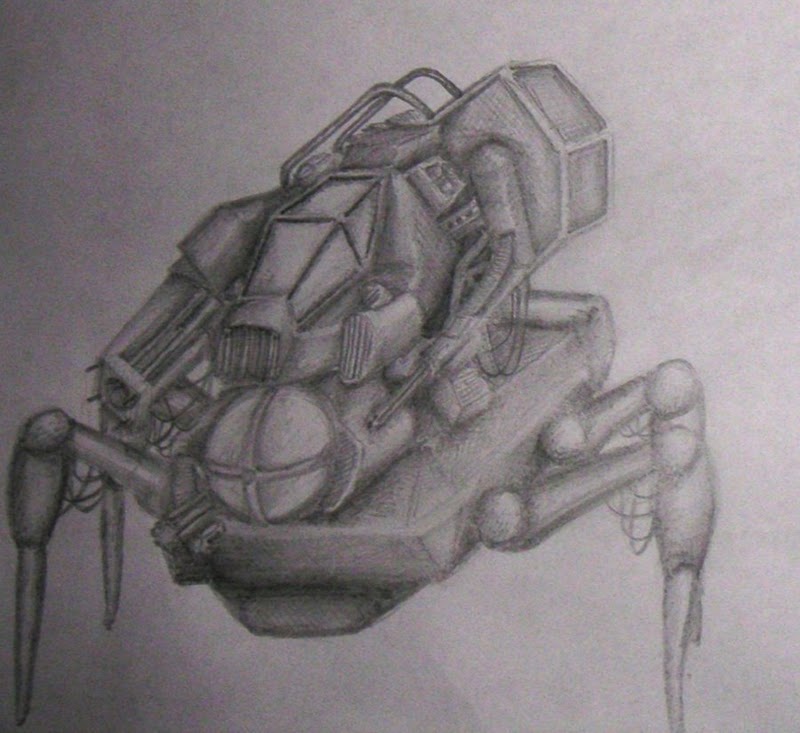
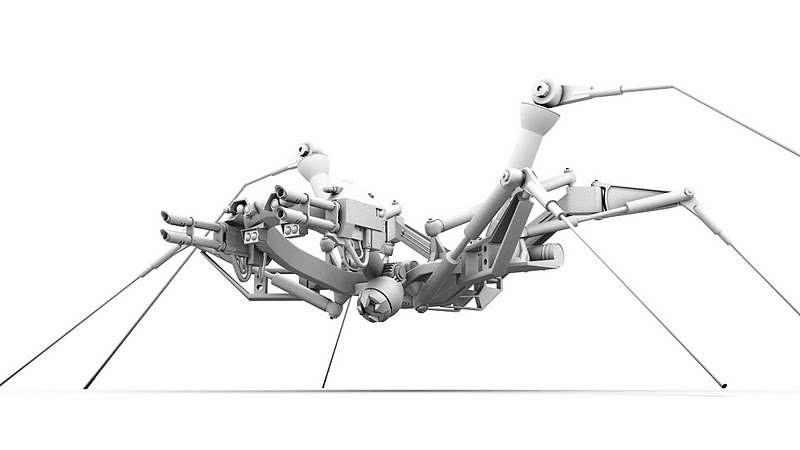
I found some more images related to robot spiders, cyborg organisms with interesting structures and designs. I specially like the sixth image as a strong influence of how menacing and exciting the creature could look. I also like the mechanisms and clockwork parts in some of the concepts to make the creature feel a bit more manufactured and could be something to consider if we end up taking the route of the creatures created by an evil scientist.